How Often Should Fire Extinguishers Be Serviced?
Check fire extinguisher service intervals, monthly visual checks, five-year extended servicing and CO2 ten-year overhauls. Book servicing across Kent.
Conventional fire extinguishers in UK businesses should normally receive a competent person’s basic service every 12 months under BS 5306-3. Most water-based and powder units also need five-year extended servicing; CO₂ units normally need a ten-year overhaul. Carry out visual checks between visits, normally at least monthly.
If you have just noticed an old date on a label, start by checking the last service record. A cylinder can look fine while having faults that only a competent engineer can identify.
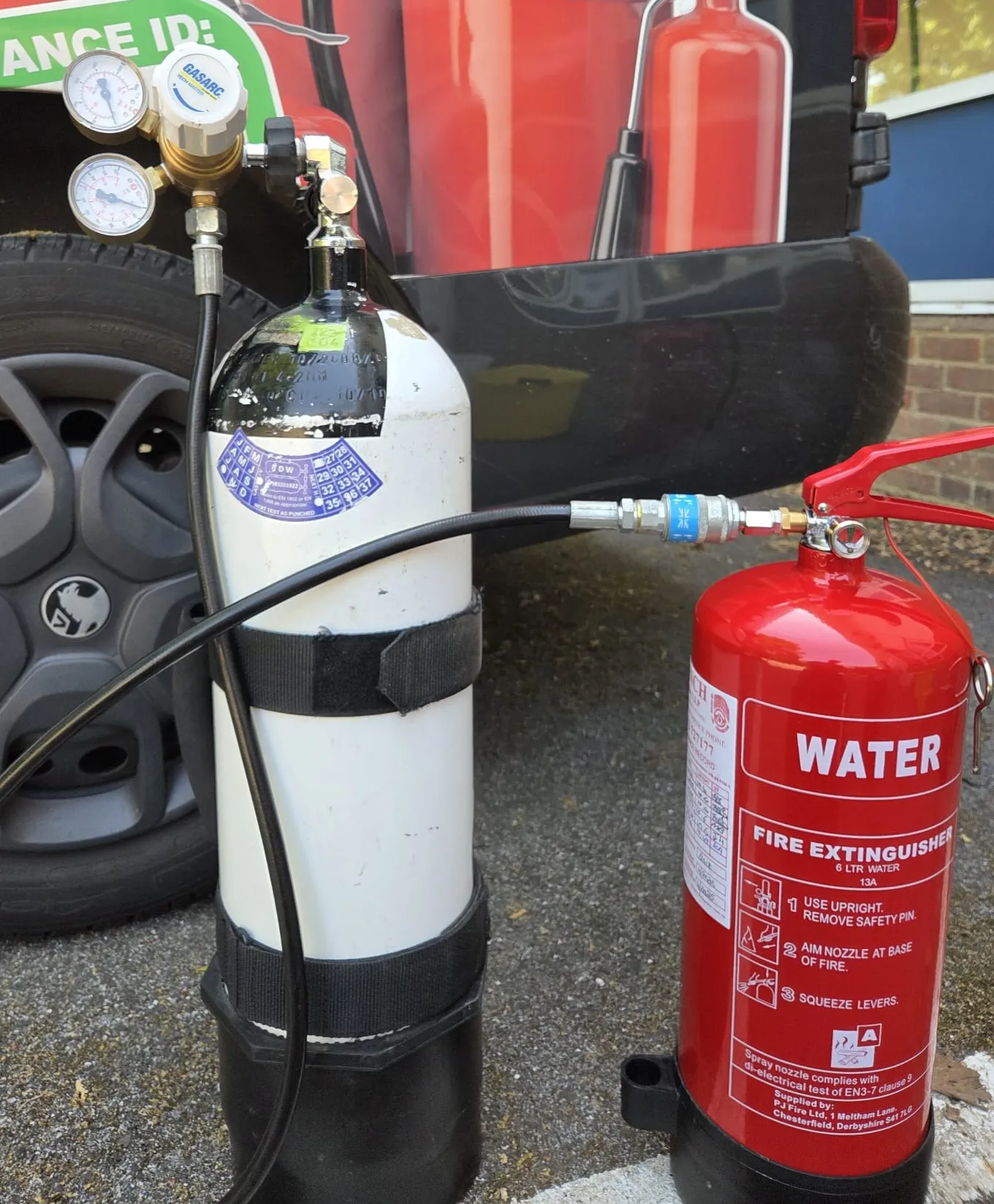
The fire extinguisher maintenance timeline
These are typical intervals, not a universal timetable for every product. Specialist and manufacturer-specific maintenance systems, including some composite extinguishers, have different requirements. Your engineer should identify the correct programme for the actual units.
| When | Typical maintenance |
|---|---|
| Normally at least monthly | Visual checks: confirm each extinguisher is present, accessible and free from obvious damage. Check the seal and gauge where fitted. |
| Every 12 months | Arrange a basic service by a competent extinguisher engineer, normally at intervals not exceeding 12 months. |
| Normally every 5 years | Standard water, foam, wet chemical and most powder extinguishers need an extended service, or replacement where appropriate. |
| Normally every 10 years | CO₂ extinguishers need a specialist overhaul, including appropriate cylinder pressure testing, or replacement. |
| Straight away if something is wrong | Arrange competent attention after use, damage, leakage or suspected tampering. Do not wait for the next scheduled service. |
Intervals depend on the extinguisher, its condition and the manufacturer’s instructions. Specialist products may have different maintenance arrangements. Visual checks do not replace professional servicing.
CO₂ ten-year overhaul dates should be checked against the cylinder’s relevant dates and service history, rather than calculated from an assumed purchase date.
What happens at an annual fire extinguisher service?
A professional basic service goes beyond checking whether the pressure gauge is green. The exact work depends on the type and manufacturer’s instructions, but normally covers:
- Identification, maintenance history and suitability for the location.
- Cylinder condition, including damage, corrosion and leakage.
- Handles, operating mechanism, safety pin and tamper arrangements.
- Hose, nozzle or horn condition and obstruction checks.
- Pressure or contents checks appropriate to the model, including weight where required.
- Required maintenance items, labels and operating instructions.
- Service recording and advice on faults, replacements or further work.
Our fire extinguisher servicing page explains the service in more detail.
A basic service does not normally involve fully discharging every extinguisher. That is one reason the longer maintenance cycle matters.
Extended servicing explained
For standard water, foam, wet chemical and most powder extinguishers, an extended service is normally due every five years.
This typically includes a controlled test discharge, internal examination and appropriate work before refilling and repressurising. It assesses aspects of operation that an ordinary annual service cannot fully demonstrate.
The work needs suitable facilities, equipment and arrangements for handling the agent. Do not discharge an extinguisher yourself to see whether it works. Contents should not be emptied onto open ground or into drains.
Sometimes replacement is more economical than testing and refilling, particularly for a small older unit or one needing additional repairs. Ask for the reason and costs so you can make an informed decision.
CO₂ extinguishers follow a different cycle, normally involving a ten-year overhaul and hydraulic pressure testing, or replacement. This is specialist work, not an extra step in your monthly inspection.
Your checks between services
A simple routine helps you spot missing equipment and visible problems early. For conventional extinguishers, arrange visual checks normally at least monthly, increasing the frequency where the environment or risk requires it.
Check that:
- The extinguisher is in its designated position.
- You can see and reach it without moving stock or furniture.
- The bracket or stand appears secure.
- The operating instructions remain readable.
- The safety pin and tamper arrangements appear intact, where fitted.
- There is no obvious damage, corrosion or leakage.
- The hose, nozzle or horn appears unobstructed and undamaged.
- The gauge is in the indicated operating range, where a gauge is fitted.
- The service date is current and outstanding actions have been addressed.
Record the date, extinguisher identification, checker, defects and action taken in your fire logbook. Name a deputy so checks continue during absence.
When you should not wait for the next service
Arrange prompt competent attention if an extinguisher has been used, even briefly. It may no longer contain enough agent or retain pressure reliably.
The same applies to a broken tamper seal, missing pin, leakage, significant corrosion, damage or a gauge outside its operating range. Do not attempt to repair or repressurise it yourself.
After a fire, have affected equipment assessed even if it was not discharged. Heat exposure can compromise it.
Building work, a refit or a move can also change the risks. Relocating an intact unit does not automatically mean it needs a full service, but the new position and suitability must be checked. A fryer replacing a preparation counter can change the required extinguisher type.
Make sure any temporary replacement provision is suitable while defective equipment is removed.
How to tell when yours was last serviced
Look for the service label, usually on the cylinder. It should identify the service date and provider, with the work recorded and often the next due date.
Match it to your maintenance report. A manufacturing date, purchase sticker or delivery date is not the same as evidence of professional servicing.
If the writing is unreadable, the label is missing, or the history is unclear, ask an engineer to establish the appropriate next steps. A photograph cannot establish serviceability remotely.
Does more frequent servicing ever make sense?
Yes. Construction sites, exposed coastal locations, vehicles and outdoor events can expose extinguishers to corrosion, vibration, dirt and damage. Busy public areas may also present a higher risk of tampering.
More frequent visual checks, additional professional attention or better protection may be appropriate. Agree the approach using the fire risk assessment, manufacturer’s instructions and the engineer’s findings.
Our types and colours guide helps identify equipment. For legal duties, read our UK fire extinguisher regulations guide.
When was yours last serviced?
PAT Test & Fire Extinguisher Specialists helps businesses across Kent, including Thanet, Canterbury, Dover and Folkestone, keep their maintenance on track.
Our City & Guilds qualified engineers check the equipment, explain any action needed and provide service records. If a replacement is required, we can help with suitable replacement extinguishers and installation.
Can’t remember your last service? We’ll check them for you. Book a fire extinguisher service or call 01843 842762 for a free, no-obligation quote.
Frequently asked questions
Is annual fire extinguisher servicing a legal requirement?
The law requires appropriate maintenance and equipment kept in efficient working order and good repair. The usual annual basic-service interval for conventional extinguishers comes from BS 5306-3, rather than an explicit 12-month interval in the Fire Safety Order.
What is the difference between a basic and extended service?
A basic service is the normal annual maintenance visit. An extended service involves additional work, typically a controlled discharge, internal examination and refill, and is normally due every five years for standard water-based and most powder units.
Can I service my own fire extinguishers?
You can carry out routine visual checks if you understand what to look for. Professional servicing requires a competent person with suitable training, knowledge, experience and equipment. A visual check does not replace that work.
How long does a fire extinguisher service take?
It depends on the number, type, condition and accessibility of the extinguishers. Faults and additional work can extend the visit. Tell us about your equipment and premises when requesting a quote so we can advise.