Fire Extinguisher Types and Colours Explained
Understand UK fire extinguisher types and colours, what each is used for and how to check your Kent business has suitable equipment in the right places.
Most modern UK fire extinguishers have a red body with a coloured label or band identifying their contents. That colour helps you recognise the type, but the printed fire rating and instructions tell you what it can safely tackle.
For a café in Canterbury, an office in Margate or a workshop in Dover, the important question is whether the extinguishers match the risks. Choosing by colour alone can leave a gap in your protection, particularly around cooking equipment, electrical installations or specialist materials.
This guide explains fire extinguisher types and colours and their limitations. In an emergency, raise the alarm, evacuate and call 999. Only attempt firefighting if trained, safe and able to maintain a clear escape route.
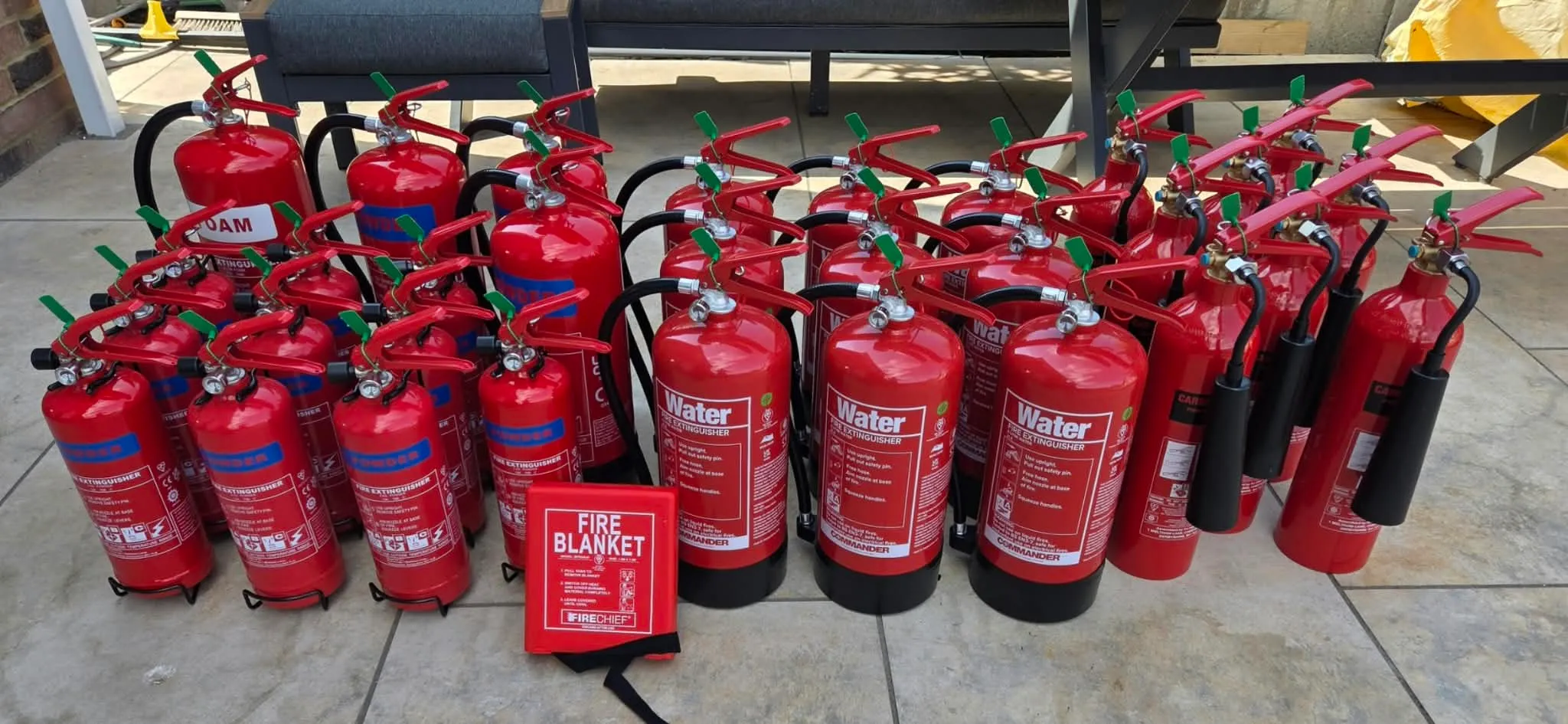
Why UK fire extinguishers are mostly red
Portable extinguishers manufactured to BS EN 3 are predominantly red, with a smaller coloured area identifying the extinguishing agent.
You may still come across older extinguishers with entirely black, cream or blue bodies. These deserve a professional assessment of their age, condition and maintenance history. An old-looking unit should never be assumed serviceable because it remains on its bracket.
Colour is only the starting point. Read the agent name, fire-class symbols, rating and warnings on the actual extinguisher. Capabilities can vary between similar-looking units.
The classes of fire
The class describes the burning material. It helps determine which extinguisher is suitable.
| Fire class | What is burning? | Examples |
|---|---|---|
| A | Solid materials | Wood, paper, cardboard and textiles |
| B | Flammable liquids | Petrol, solvents and some paints |
| C | Flammable gases | Propane, butane and methane |
| D | Combustible metals | Magnesium, sodium and certain metal powders |
| F | Cooking oils and fats | Deep-fat fryers and commercial cooking equipment |
| Electrical involvement | Energised electrical equipment | Computers, distribution boards and appliances |
Electrical fires are not a separate UK fire class. Electrical involvement creates an additional hazard, and suitability must be checked separately. Do not confuse UK Class C, meaning gases, with overseas charts that use C for electrical equipment.
Each fire extinguisher type explained
Water extinguishers: red identification
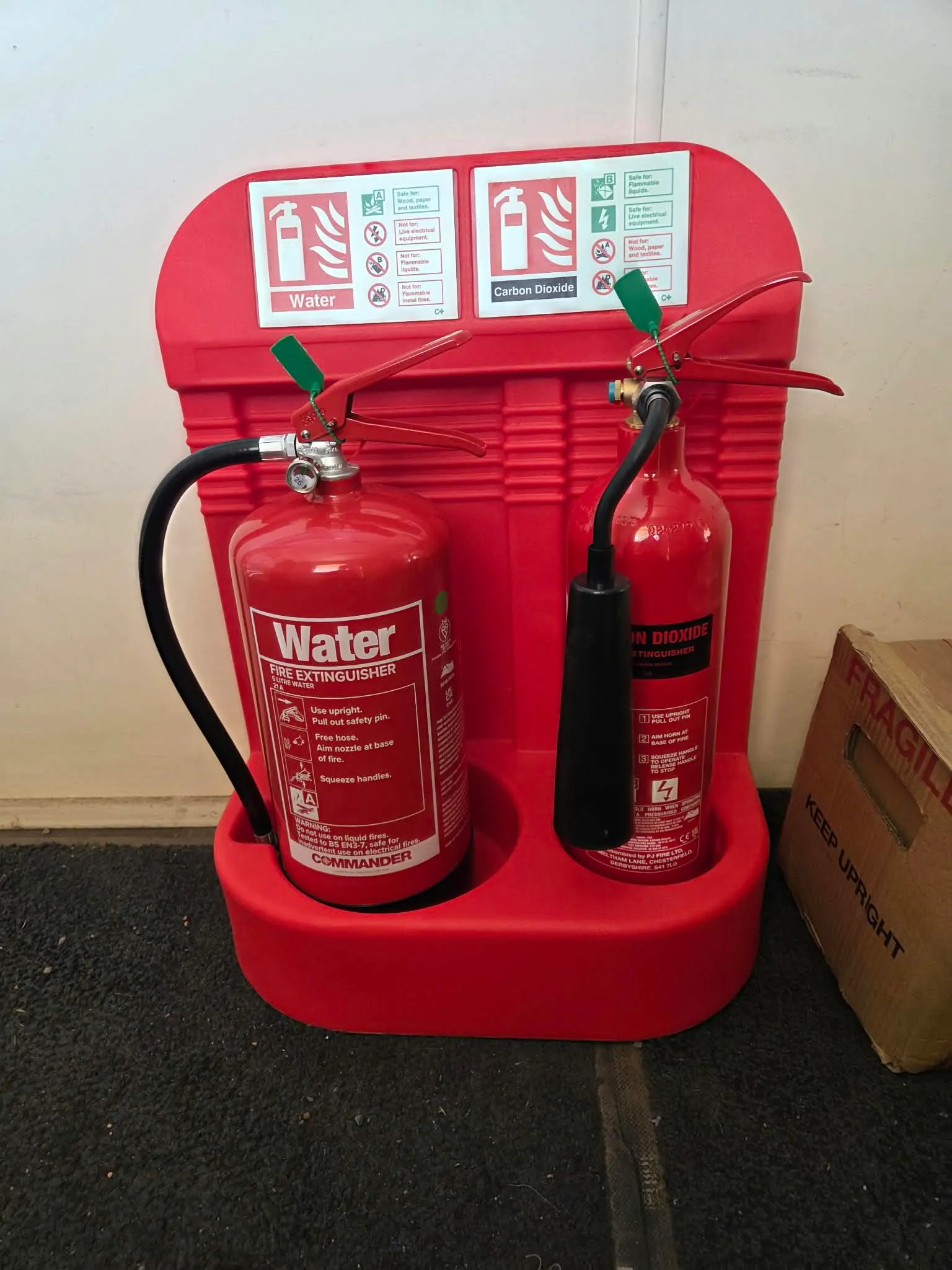
Standard water extinguishers tackle Class A fires involving materials such as paper, timber and fabric. They cool the burning material and are often found in offices, shops, schools and storage areas.
Do not use a standard water extinguisher on live electrical equipment, flammable liquids, burning metals or cooking oils and fats. Water can create an electric shock risk or spread burning liquid. Water-based specialist products have different capabilities, so never transfer a claim from one product to another.
Water mist extinguishers: commonly white identification
Water mist extinguishers discharge fine droplets. Class A use is common, while some models have additional ratings, including Class F, or specific electrical-use markings.
They can offer useful cooling without powder contamination, but they still discharge water and should not be described as leaving no residue or causing no damage.
Never assume every water mist extinguisher suits electrical equipment, cooking oil or flammable liquids. Ratings, maximum cooking-oil capacities, voltage limits and operating distances depend on the model. Manufacturer restrictions can be narrower than a headline rating suggests.
Water mist may suit mixed-use premises after assessment. It is not a blanket replacement for all other extinguishers.
Foam extinguishers: cream identification
Foam extinguishers commonly cover Class A and Class B fires. They may be selected where solid combustibles and flammable liquids are present, such as certain workshops and storage areas.
On a suitable liquid fire, foam forms a layer over the fuel surface. However, the liquid itself matters: a general foam extinguisher is not automatically suitable for every solvent.
Do not use ordinary foam on cooking-oil, gas or metal fires. Do not assume it is suitable for live electrical equipment. Any electrical-use claim must be assessed against the specific product markings, instructions and selection guidance. Ask your engineer before choosing foam for an electrical hazard.
CO₂ extinguishers: black identification
Carbon dioxide extinguishers are commonly selected for electrical equipment and have Class B applications. They leave no extinguishing-agent residue, making them useful around computers and office equipment.
A CO₂ extinguisher alone usually does not provide suitable Class A protection for furniture, paper and other solid materials. Its limited cooling can allow a fire to reignite.
Do not use CO₂ on deep-fat fryers, burning metals or gas fires. Discharge can displace breathable air, so confined spaces require particular care. The horn can become dangerously cold: follow the instructions and only use the designated handle or insulated grip.
Dry powder extinguishers: blue identification
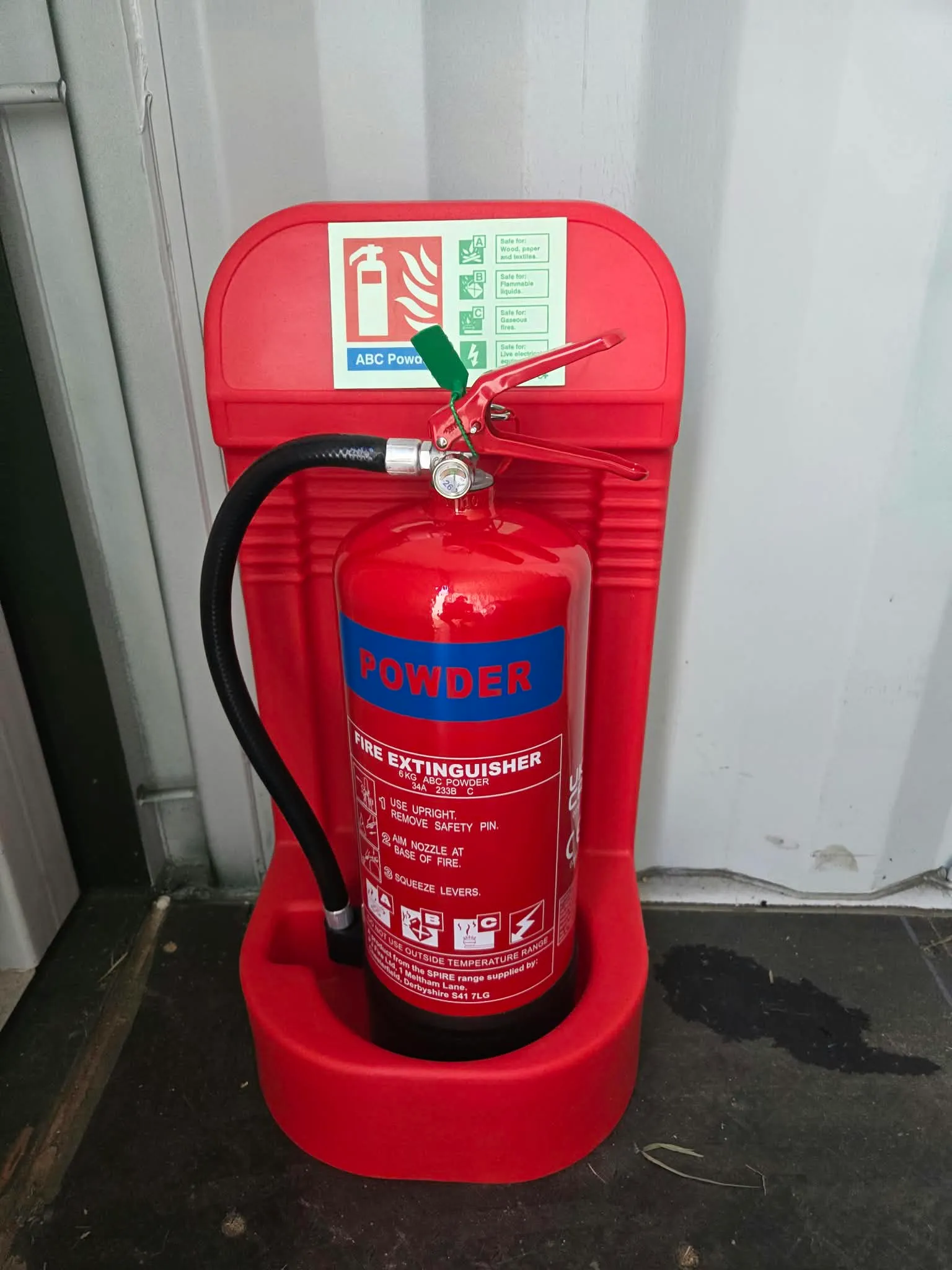
Multipurpose ABC powder extinguishers are rated for Class A, B and C fires. Many also carry suitability markings for electrical equipment.
They may be considered for suitable outdoor, vehicle or industrial risks. However, powder can obscure escape routes, affect breathing and contaminate equipment. It is generally unsuitable for enclosed occupied spaces unless a specific risk assessment justifies its use.
Do not use ordinary ABC powder on cooking-oil or metal fires. A blue band does not mean the contents can tackle every fire.
A gas flame should not be extinguished unless the gas supply can be safely isolated. Otherwise, unburnt gas can accumulate and create an explosion risk. This requires trained intervention, not an improvised response.
Wet chemical extinguishers: yellow identification
Wet chemical extinguishers are designed for Class F fires involving cooking oils and fats. They cool the oil and create a protective surface layer that helps prevent reignition.
They are commonly found in commercial kitchens with deep-fat frying equipment. Many also have a Class A rating, but their other capabilities must be checked individually.
Do not substitute water, ordinary foam or CO₂ for suitable Class F protection. Check the extinguisher’s cooking-oil capacity rating against the appliance. Do not assume a wet chemical unit is suitable for electrical, gas, metal or general flammable-liquid fires unless its specific markings support that use.
Specialist metal-fire powder: violet identification
Class D extinguishers contain specialist agents for combustible metals. Current UK colour coding uses signal violet, although older equipment may carry blue identification. See the London Fire Brigade guidance on portable firefighting equipment.
These are specialist workshop and industrial products. The agent must match the metal involved: a product intended for magnesium is not automatically suitable for lithium metal or every other combustible metal.
Never substitute ordinary ABC powder, water or another general-purpose extinguisher for the specified metal-fire agent. If metal powders, swarf or reactive metals form part of your work, get specialist advice.
Lithium-ion battery extinguishers: check the specific product
Lithium-ion battery fires can involve thermal runaway, where heat drives further cell failure. Visible flames disappearing does not necessarily mean the incident is controlled.
Products marketed for lithium-ion batteries use different agents and have specific limits. There is no single colour band that proves a unit is suitable for your battery risk. Check the test evidence, battery size and application restrictions with a specialist.
Lithium-ion batteries are not the same hazard as burning lithium metal. A Class D label is not a universal answer for rechargeable battery fires.
If a battery is smoking, hissing, swelling or burning, raise the alarm, evacuate and call 999. Do not approach it to experiment with an extinguisher.
Fire extinguisher colour chart at a glance
Colour helps identify the contents. Always check the extinguisher’s label, fire rating and instructions.
| Type | Identification | Typical use |
|---|---|---|
| Water | Red | Class A solid materials |
| Water mist | Commonly white | Class A; additional uses vary by model |
| Foam | Cream | Class A and suitable Class B liquids |
| CO₂ | Black | Electrical equipment and Class B |
| ABC dry powder | Blue | Classes A, B and C; check electrical suitability |
| Wet chemical | Yellow | Class F cooking oils and fats; often Class A too |
| Specialist Class D powder | Violet* | Specified combustible metals |
| Lithium-ion specialist | No universal band | Only battery applications supported by the product’s evidence |
*Older Class D extinguishers may show blue identification. This chart is an identification aid. Suitability depends on the product markings and your fire risk assessment.
Always read the label. This chart supports identification and does not replace training or a fire risk assessment.
Which extinguishers does my premises usually need?
Offices and shops
An office often needs protection for ordinary solid materials alongside electrical risks. A suitable water-based extinguisher and CO₂ may form part of that provision. Layout, ratings and the equipment present determine the final selection.
Cafés and restaurants
Front-of-house furniture, electrical equipment and kitchen appliances create different risks. A café using deep-fat fryers will usually need suitable Class F protection. A correctly selected fire blanket may complement the arrangements, but it does not replace an adequately rated fryer extinguisher.
Workshops and construction sites
Timber, solvents, gas cylinders and metalworking processes need separate consideration. Construction layouts and working methods change, so yesterday’s extinguisher positions may no longer be suitable.
Outdoor events
A festival field can contain cooking stalls, generators, temporary electrics and public areas. Weather protection, clear access and staff arrangements matter alongside the extinguishing agent.
These are examples, not shopping lists. The fire risk assessment determines the equipment, quantity, ratings and positioning.
For help selecting and commissioning equipment, ask about the supply and installation of the right extinguishers.
Signs you may have the wrong extinguisher
Arrange a suitability check if you notice:
- A deep-fat fryer with CO₂ nearby but no suitable Class F provision.
- Powder units in a small occupied office without an assessment justifying them.
- Standard water presented as the only protection for energised electrical equipment.
- Unreadable labels, very old fully coloured bodies or missing service records.
- New processes, charging equipment or flammable substances introduced since the last assessment.
A water extinguisher standing beside a computer is not automatically misplaced. It may protect nearby Class A materials. The question is whether the full set of risks is covered and the intended uses are clear.