Fire Extinguisher Regulations for UK Businesses
Understand UK business fire extinguisher duties, annual servicing guidance, responsible persons and records. Practical advice for businesses across Kent.
In England and Wales, the Regulatory Reform (Fire Safety) Order 2005 requires the responsible person to provide appropriate firefighting equipment where necessary and keep it properly maintained. BS 5306-8 guides extinguisher selection and positioning, while BS 5306-3 covers commissioning and maintenance.
For a business owner, that means checking more than whether there is a red cylinder beside the door. Your extinguishers need to suit the risks, remain accessible and work when needed. You also need arrangements for inspections, servicing, staff information and records.
This guide explains UK fire extinguisher regulations in practical terms for an office, shop, workshop or hospitality venue in Kent.
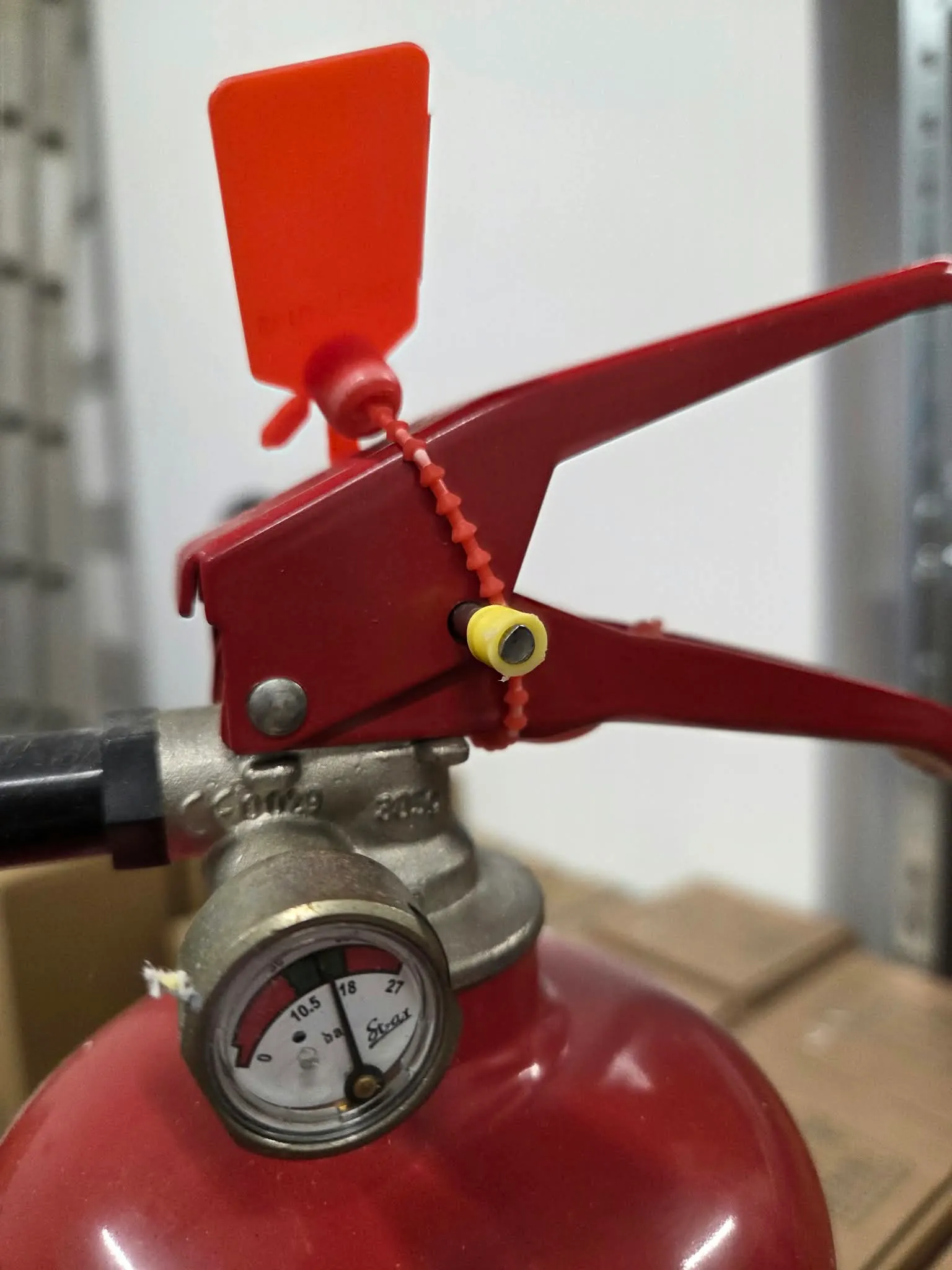
The law: the Regulatory Reform (Fire Safety) Order 2005
The Fire Safety Order is the main framework for fire safety in most non-domestic premises in England and Wales. It covers workplaces and many buildings used by the public, as well as relevant common parts of residential buildings.
It generally does not apply inside an ordinary private home. Mixed-use premises, houses in multiple occupation and residential common areas need more careful assessment because different duties can overlap.
The Order requires a suitable and sufficient fire risk assessment and appropriate fire precautions. Article 13 addresses firefighting equipment, taking account of the premises, activities, hazards and people present. Article 17 addresses maintenance, including keeping relevant equipment in efficient working order and good repair.
These duties work together. Buying an extinguisher does not complete the job if it is the wrong type, hidden behind stock or left without maintenance.
Who is the responsible person?
In a workplace, the employer is usually the responsible person where the workplace is under their control. Owners, landlords, occupiers and others controlling premises can also have duties, depending on their role.
A managing agent may carry out agreed tasks, but appointing a contractor does not automatically remove the duties of the employer or building owner. Responsibilities must be understood and coordinated.
For example, a tenant might manage extinguishers inside their shop while a landlord manages shared corridors. Both need to know what the other is doing where their arrangements affect one another.
GOV.UK explains who is responsible for workplace fire safety. If responsibility is unclear, resolve it rather than assuming the landlord’s service visit covers your own equipment.
Start with the fire risk assessment
An assessment identifies sources of ignition, combustible materials, people at risk and the precautions needed. It should consider how people will escape and how any firefighting equipment fits the wider arrangements.
For extinguishers, that includes the burning materials, electrical involvement, layout and whether trained people can reach equipment without entering danger.
Review the assessment when circumstances change. A new fryer, relocated workshop, battery-charging area or change of occupancy can affect what is suitable. An annual service cannot compensate for an assessment that no longer reflects the business.
Fire safety changes worth knowing about
Fire Safety Act 2021
The Fire Safety Act clarified the Fire Safety Order’s application to buildings containing two or more domestic premises. Relevant parts include the structure, external walls and flat entrance doors opening onto common parts.
This matters to landlords and managing agents, but it does not create a simple rule that every flat or communal corridor must contain portable extinguishers. Provision must fit the building’s assessed risks and fire strategy.
Recorded assessments and arrangements from October 2023
From 1 October 2023, amendments introduced through the Building Safety Act 2022 strengthened responsible persons’ duties in England and Wales.
Responsible persons must record the fire risk assessment in full, including its findings, and record their fire safety arrangements. The previous approach of linking certain recording requirements to five or more employees should not be used as a small-business exemption.
They must also record the identity of the person or organisation engaged to undertake or review the assessment. Relevant information must be shared between responsible persons and passed to successors where required. The government’s guide for people with duties under fire safety legislation explains these changes.
Fire Safety (England) Regulations 2022
These regulations introduced additional duties for multi-occupied residential buildings in England, with requirements varying by building height and type.
They include resident information, fire-door checks in buildings over 11 metres and further duties for high-rise residential buildings. The monthly checks of specified firefighting equipment in high-rise buildings should not be confused with a universal statutory monthly inspection rule for every portable extinguisher.
Landlords and managing agents should use the government’s guidance on the 2022 regulations alongside the building’s own assessment.
Residential evacuation requirements from April 2026
Additional residential evacuation-planning duties came into force in England on 6 April 2026. They concern specified residential buildings and arrangements for residents whose ability to evacuate may be affected by a disability or other impairment or condition. The Residential PEEPs guidance explains the requirements for responsible persons.
These requirements are separate from an extinguisher service programme. If you manage a residential building, check whether the requirements apply. An extinguisher maintenance certificate is not evidence that all building fire safety duties have been met.
British Standards: what they mean in practice
British Standards are not themselves legislation. They provide recognised technical recommendations that can help demonstrate appropriate arrangements. They can also be relevant to contracts and insurance conditions.
Following a standard does not replace the duty to consider your actual risks. An alternative approach needs suitable technical justification, rather than an assumption that maintenance is optional.
BS 5306-8:2023: selection and positioning
BS 5306-8:2023 is the current edition covering the selection and positioning of portable extinguishers. It replaced the 2012 edition. See the BSI catalogue entry for BS 5306-8.
It helps competent people determine suitable types, ratings, quantities and locations. Choosing equipment involves more than counting floor area or copying what the neighbouring business has installed.
An office and a restaurant can occupy similar-sized units while needing different provisions. The restaurant’s cooking risks and the office’s equipment need to be considered separately.
Our guide to fire extinguisher types and colours explains the main agents and their limitations.
BS 5306-3:2017: commissioning and maintenance
BS 5306-3:2017 covers commissioning and maintenance of portable extinguishers. For conventional serviceable extinguishers, a basic service by a competent person is normally due at intervals not exceeding 12 months.
Further work is normally required at longer intervals. Many water-based and powder extinguishers have a five-year extended-service cycle, while CO₂ extinguishers normally need a ten-year overhaul. Manufacturer-specific arrangements and equipment condition can change the programme.
The Fire Safety Order does not literally say “service every 12 months”. The legal duty concerns suitable maintenance; the annual basic-service recommendation comes from the standard. Find out more about our fire extinguisher servicing.
BS EN 3: the extinguisher itself
BS EN 3 is a series of product standards covering portable extinguishers, including performance, construction and marking requirements. Modern equipment is predominantly red, with identification markings showing the agent and uses.
A product marking does not prove that an extinguisher is suitable for its location or currently serviceable. Selection, commissioning and maintenance remain separate considerations.
A practical checklist for the responsible person
1. Keep an assessment that reflects the premises
Record the assessment, its findings and your arrangements. Allocate actions to named people with sensible completion dates. Revisit the assessment after changes, incidents or evidence that precautions are inadequate.
2. Match extinguishers to the hazards
Check that the types and ratings cover the identified risks. Deep-fat frying, flammable liquids and ordinary office materials need different consideration. Equipment bought online should be professionally assessed and commissioned before being relied on.
3. Keep equipment visible and accessible
Extinguishers should be in suitable designated positions with appropriate identification. Stock, furniture and deliveries must not block access. Avoid relocating equipment simply because a new display fits better in its old position.
4. Arrange competent maintenance
Put annual fire extinguisher servicing into the business diary. Provide access to every unit and tell the engineer about new equipment or activities. Act on defects and replacement recommendations rather than filing the report without reviewing it.
5. Check between service visits
Arrange regular visual checks, normally at least monthly for conventional equipment and more often where circumstances warrant it. Look for missing units, damage, broken seals and pressure concerns where a gauge is fitted. Visual checks support professional servicing; they do not replace it.
6. Keep useful records
Keep the equipment inventory, service reports, visual-check records and evidence that defects were resolved. An inspection trail should show what happened after a problem was found, not simply that someone noticed it.
7. Give staff clear information and training
Staff need to understand the alarm, escape arrangements and their own responsibilities. Anyone designated to use firefighting equipment needs suitable training. People should never feel expected to tackle a fire beyond their training or put evacuation at risk.
Your responsibilities at a glance: assess the risks and record your arrangements; choose suitable extinguishers and position them accessibly; arrange competent servicing; check equipment between services; keep records; and inform and train staff. The Fire Safety Order requires appropriate maintenance. The usual annual basic-service interval comes from BS 5306-3.
Who enforces fire extinguisher law for businesses?
For most premises, the local fire and rescue authority enforces the Fire Safety Order. In Kent, this is normally Kent Fire and Rescue Service; in South East London, it is normally London Fire Brigade. Some specialist premises have different enforcing authorities.
An inspecting officer may look at the assessment, maintenance evidence, physical condition of equipment and how precautions are managed. A recent service label will not explain away blocked exits or unsuitable equipment.
Authorities can offer advice and, where appropriate, issue enforcement or prohibition notices. Serious offences can lead to unlimited fines and possible imprisonment. Outcomes depend on the offence and circumstances; a missed appointment does not automatically produce a fine. Read the government guidance on enforcement and sanctions.
For local guidance, see Kent Fire and Rescue Service’s business safety information.
What about insurance?
Your insurer may set requirements for maintaining fire protection equipment and keeping evidence. Check your own policy, endorsements and any instructions arising from a survey.
Overdue servicing or unresolved defects can complicate a claim, but it would be misleading to say one missed service automatically invalidates every policy. Ask your insurer or broker about the wording that applies to your business.
Keep records together so you can find them when renewing cover, speaking to a landlord or arranging an inspection.
Scotland and Northern Ireland
Different legislation applies outside England and Wales. Scotland uses the Fire (Scotland) Act 2005 and Fire Safety (Scotland) Regulations 2006; Northern Ireland uses the Fire and Rescue Services (Northern Ireland) Order 2006 and Fire Safety Regulations (Northern Ireland) 2010.
British Standards are also used as technical guidance, but responsible persons should check the relevant national requirements. This article’s detailed explanation of the Fire Safety Order concerns England and Wales.
How we help businesses across Kent
PAT Test & Fire Extinguisher Specialists provides on-site servicing, suitability checks and clear maintenance records, alongside supply and installation of suitable extinguishers.
Our City & Guilds qualified engineers explain what needs attention and why. We support businesses across Kent, including Canterbury, Thanet, Dover, Deal, Folkestone and Ashford.
Electrical equipment also needs appropriate maintenance. Our PAT testing service can support that work, although PAT testing and extinguisher servicing address separate responsibilities.
Need help getting your extinguisher maintenance in order? Request a free, no-obligation quote or call 01843 842762.
Frequently asked questions
Is it a legal requirement to have fire extinguishers?
In England and Wales, the Fire Safety Order requires appropriate firefighting equipment where necessary. The fire risk assessment determines suitable provision for the premises, hazards and people present.
Is annual fire extinguisher servicing a legal requirement?
The law requires appropriate maintenance and equipment to be kept in efficient working order and good repair. The usual annual basic-service interval for conventional extinguishers comes from BS 5306-3, rather than an explicit 12-month interval in the Fire Safety Order.
Do landlords need fire extinguishers in rented properties?
It depends on the property, its use and the applicable assessment and housing requirements. Ordinary private homes, HMOs, holiday accommodation and communal parts of blocks of flats should not all be treated alike. Get advice specific to the building and its fire strategy.
What happens if my extinguishers are not serviced?
Faults can remain undetected, and you may struggle to demonstrate appropriate maintenance. Arrange competent inspection promptly, address any defects and check your insurer’s requirements. Enforcement depends on the circumstances and level of risk.
Who can service fire extinguishers?
Servicing should be carried out by a competent person with appropriate training, knowledge, experience and equipment for the work. The Fire Safety Order does not prescribe one particular commercial certification scheme for every extinguisher technician.
This guide provides general information, not legal advice. Check the requirements and professional advice relevant to your premises.